Let’s be honest: figuring out what to wear to the office can feel like a daily puzzle. You want to look professional, but not stiff. Stylish, but not like you’re trying too hard.
Comfortable, but not like you rolled out of bed. And with workplace dress codes becoming increasingly ambiguous — somewhere between “business professional” and “we’re pretty relaxed here” — the pressure to decode it all falls squarely on you and your closet.
Here’s the good news: building a wardrobe of reliable, repeatable office outfits is much easier than it seems. You don’t need a closet bursting with clothes. You need a handful of smart formulas — combinations you can rely on when your brain is still waiting for its first coffee.
In this guide, we’re breaking down 10 business and office outfit ideas that work across industries, seasons, and dress codes. For each one, you’ll find styling tips, fabric suggestions, and small tweaks to dress the look up or down. Whether your office leans corporate, creative, or somewhere in between, there’s a formula here for you.
1. The Power Suit, Reimagined
The suit is no longer reserved for boardrooms and interviews. Today’s power suit is softer, more relaxed, and endlessly versatile. Think a slightly oversized blazer with matching straight-leg or wide-leg trousers in a modern shade — sage green, chocolate brown, or classic navy.
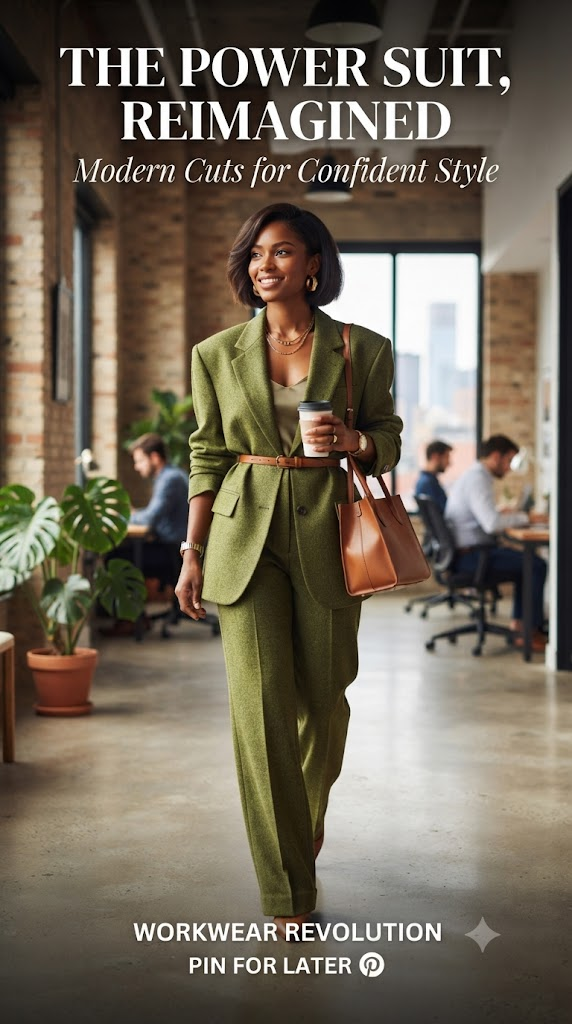
The real magic of a suit is that it’s actually three outfits in one. Wear the full set for important meetings and presentations. Pair the blazer with jeans on casual Fridays. Style the trousers with a fine knit for everyday polish. That’s a serious return on investment from two pieces of clothing.
How to style it: Swap the traditional button-down for a simple white tee or a silk camisole to keep the look current. Finish with loafers, pointed flats, or clean white sneakers depending on your office vibe.
Fabric tip: Look for suiting with a touch of elastane or a wool blend. It resists wrinkles, moves with you, and survives a full day of desk-to-meeting sprints.
2. Tailored Trousers and a Silk Blouse
If there were a Hall of Fame for office outfits, this pairing would be a first-ballot inductee. Well-cut trousers and a silky blouse deliver maximum elegance with minimal effort, and the combination flatters virtually everyone.
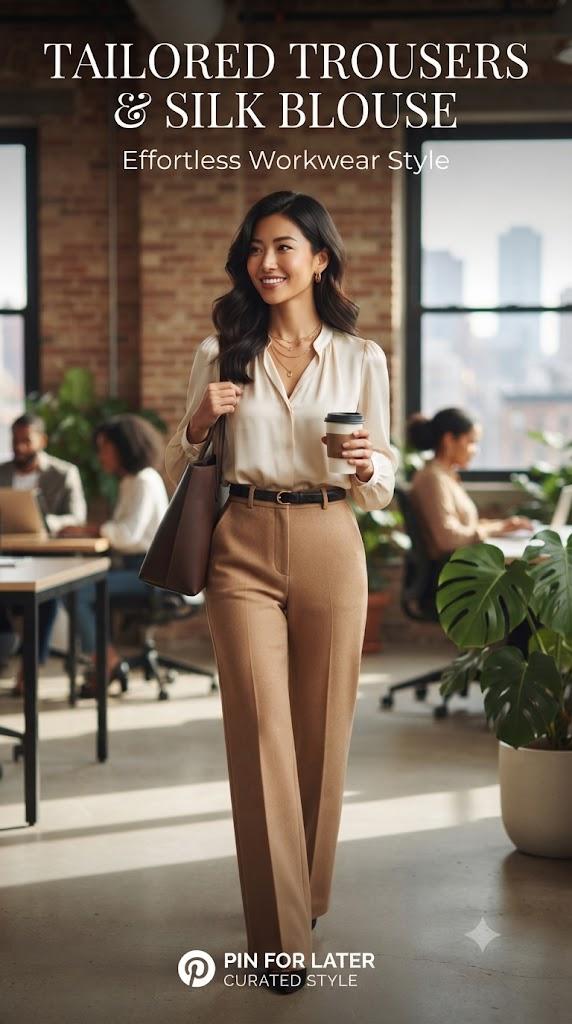
Choose trousers in a neutral base color — black, navy, charcoal, or camel — with a high or mid-rise waist and a clean drape. For the blouse, satin and silk-blend fabrics catch the light beautifully and instantly read as “expensive,” even when they aren’t.
How to style it: Tuck the blouse in fully for a sleek, elongated silhouette, or do a relaxed front tuck for something more effortless. Add a slim leather belt and delicate jewelry — a thin gold chain, small hoops — to complete the look.
Dress it up or down: Add a blazer and heels for client-facing days; swap in loafers and remove the belt for a softer, everyday feel.
3. The Sheath Dress + Blazer Duo
Some mornings, the fewer decisions, the better. Enter the sheath dress: a fitted, knee-length dress that has been a cornerstone of professional style for decades — and for good reason. It’s a complete outfit in a single garment.
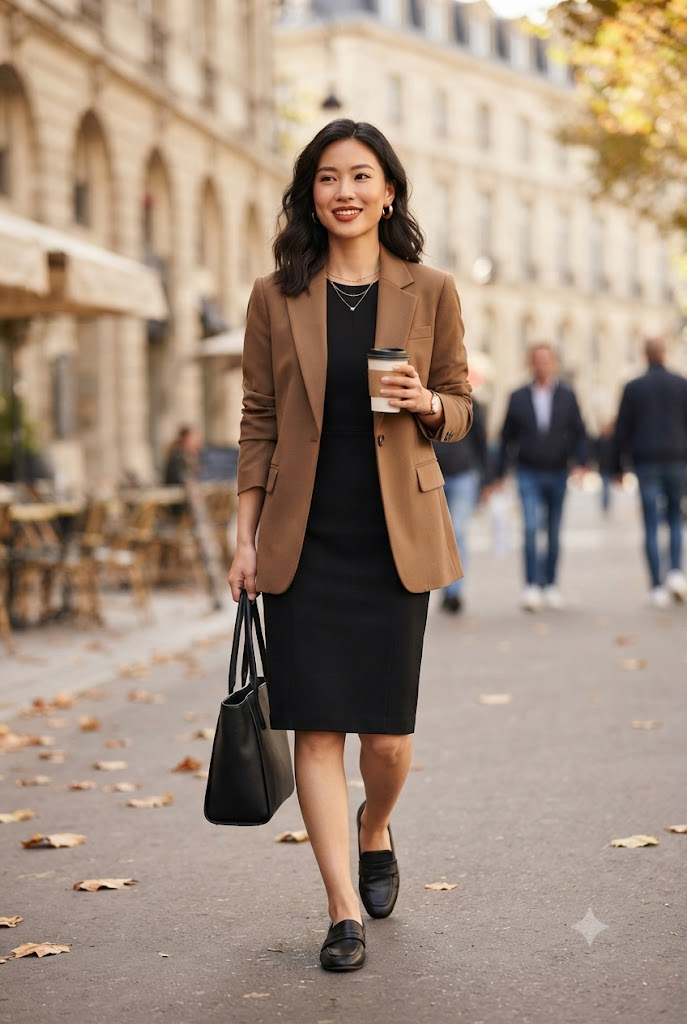
A sheath in black, navy, or a rich jewel tone like emerald or burgundy pairs beautifully with a structured blazer. The result is a look that works for interviews, presentations, conferences, and everything in between.
How to style it: Match your blazer to the dress for a suit-like effect, or contrast it — a camel blazer over a navy dress is a timeless combination. Closed-toe pumps or block heels keep it classic; ankle boots modernize it in cooler months.
Comfort tip: Look for ponte knit sheath dresses. They hold their structure like traditional suiting but feel like secret loungewear.
4. The Button-Down and Pencil Skirt Classic
There’s a reason this combination has survived every fashion cycle: it simply works. A crisp button-down shirt tucked into a pencil skirt is sharp, structured, and universally office-appropriate.
To keep the look fresh rather than dated, play with proportion and detail. A slightly oversized poplin shirt half-tucked into a high-waisted skirt feels modern. A skirt with a subtle slit, interesting texture, or soft plaid pattern adds personality without sacrificing professionalism.
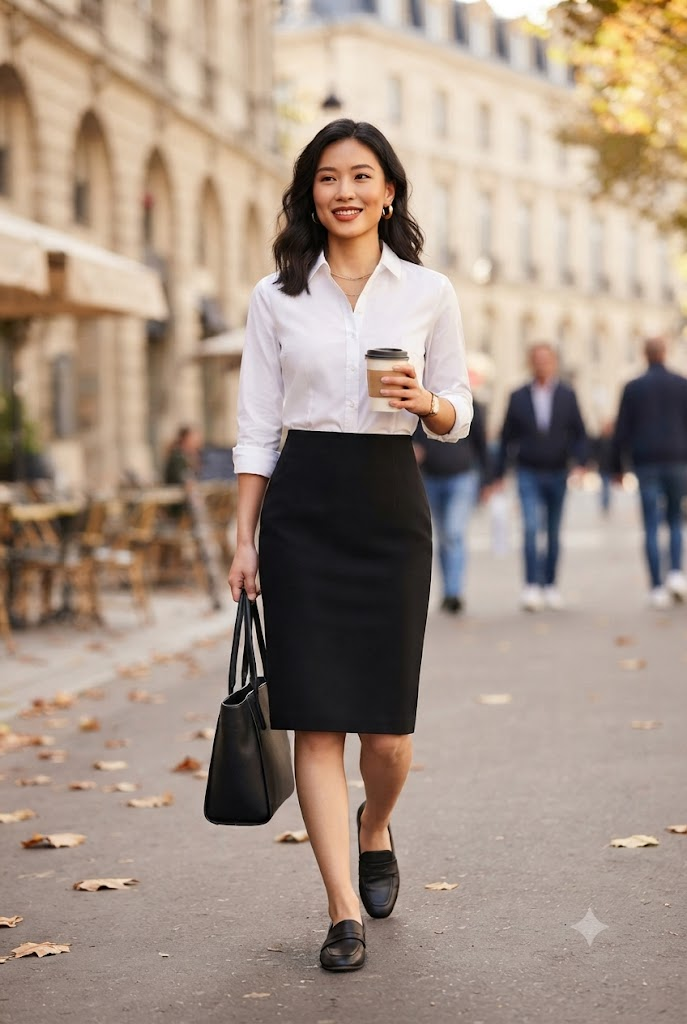
How to style it: Roll the sleeves to your forearm for an approachable, “let’s get to work” energy. Slingback heels or pointed flats finish the outfit perfectly.
Color play: You can’t go wrong with a white or pale blue shirt, but don’t be afraid of soft stripes or a muted pattern. Keep the skirt in a neutral shade and let the shirt do the talking.
5. Monochrome Dressing
Want to look instantly more expensive without buying a single new item? Dress in one color from head to toe. Monochrome outfits — all beige, all gray, all navy, all black — look deliberate, sophisticated, and streamlined.
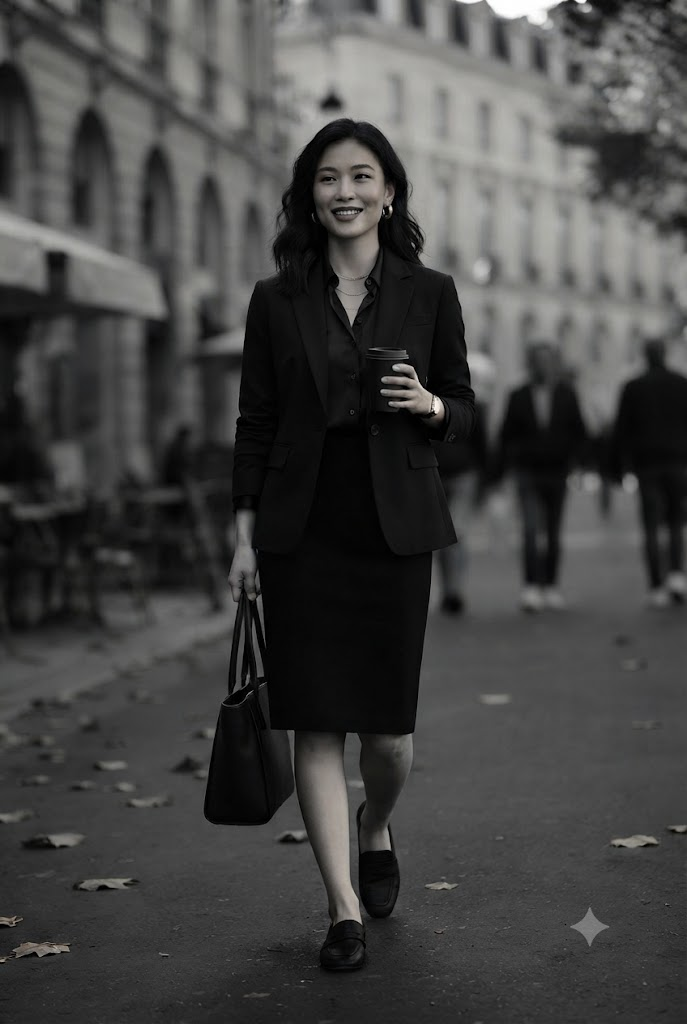
The key to keeping a single-color outfit from falling flat is texture. Pair a ribbed knit with wool trousers. Mix a satin blouse with a matte crepe skirt. Combine a cashmere sweater with structured suiting. The subtle variation in fabric creates depth and visual interest.
How to style it: Vary your shades slightly within the same family — think cream, oatmeal, and camel together — for a rich, layered effect known as tonal dressing.
Bonus benefit: Monochrome outfits visually elongate your frame, making this one of the most flattering tricks in all of office dressing.
6. The Knit Dress and Knee-High Boots
When temperatures drop, the knit dress becomes the hardest-working piece in your wardrobe. A midi-length sweater dress in a fine or medium-gauge knit is warm, comfortable, and quietly elegant — everything you want during a long workday in a chilly office.
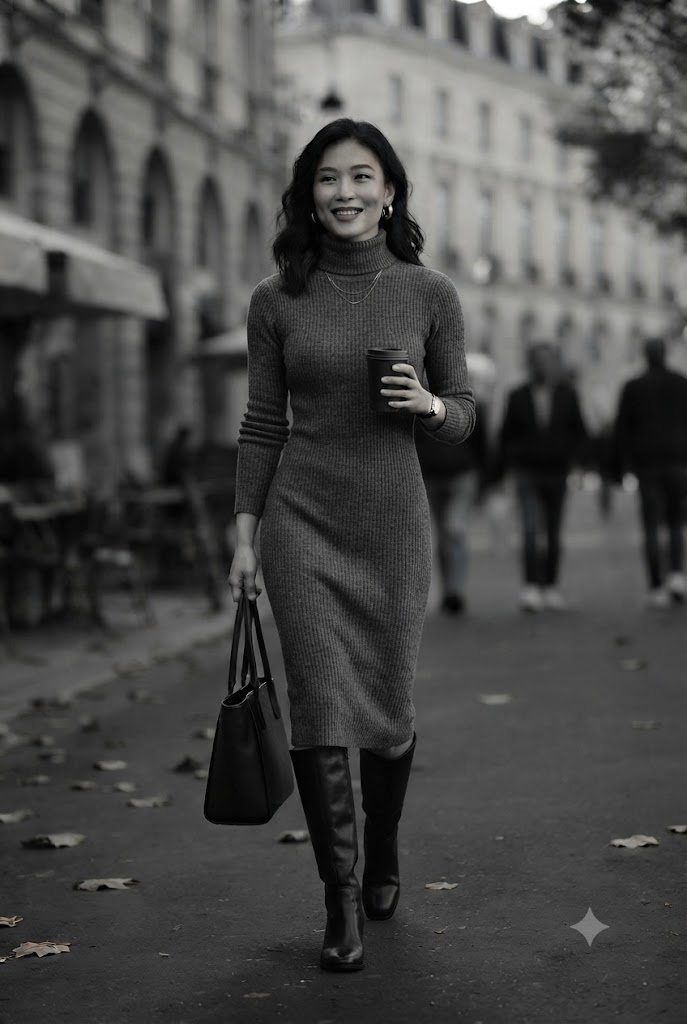
Choose a silhouette with some structure: a ribbed knit that skims the body, a wrap style that defines the waist, or an A-line cut that drapes cleanly. Neutral tones like oatmeal, charcoal, and camel are endlessly versatile, while deep jewel tones feel festive in winter months.
How to style it: Pair with knee-high leather boots — black or brown, flat or heeled — and add a longline coat for your commute. A slim belt at the waist adds definition if your dress runs loose.
Styling caution: Avoid overly chunky, slouchy knits for the office; they can tip the look from cozy-chic into weekend territory.
7. Wide-Leg Pants with a Fitted Top
Wide-leg trousers have firmly reclaimed their place in office fashion, and honestly, our comfort levels are grateful. Flowing, high-waisted, and dramatic in the best way, they bring a dose of fashion-forward polish to any workday.

The golden rule with wide-leg pants is balance. Because the bottom half has volume, keep the top half fitted: a tucked-in bodysuit, a slim turtleneck, or a fitted button-down. This contrast creates a clean, tailored silhouette rather than a shapeless one.
How to style it: Heeled boots or block heels help the hem hover elegantly above the floor. If you prefer flats, have the trousers hemmed so they break just at the top of your shoe.
Fabric matters: Crepe, twill, and wool-blend wide-legs hold their drape all day. Skip anything too thin or clingy, which can wrinkle and lose shape by lunchtime.
8. The Cardigan Set (Modern Edition)
The matching knit set has undergone a serious glow-up. Today’s version — a fitted shell or tank with a matching cardigan layered over top — is sleek, polished, and quietly luxurious. It’s the kind of outfit that whispers competence.
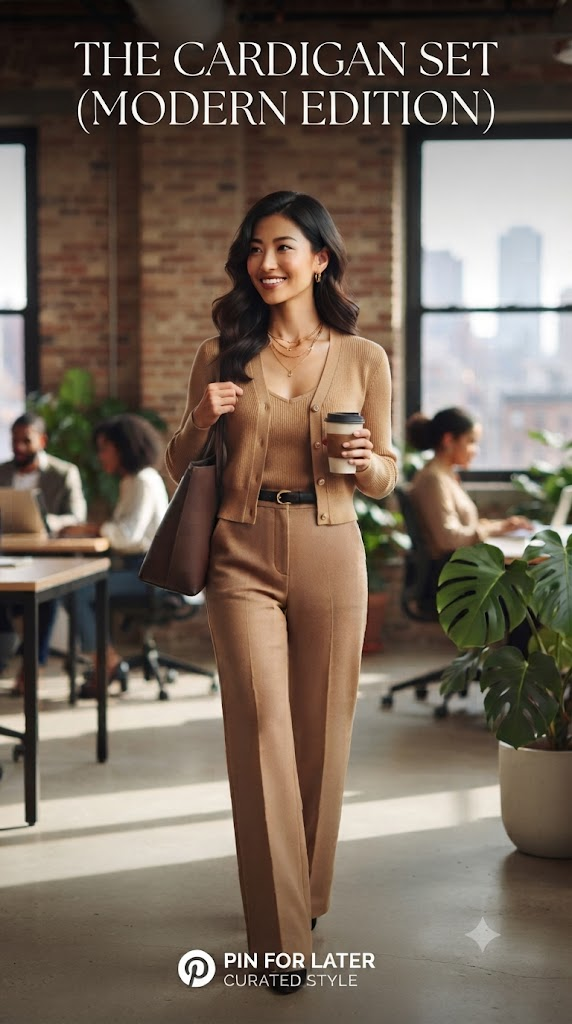
Pair your knit set with tailored trousers or a midi skirt, and you have an outfit that transitions seamlessly from morning meetings to after-work dinners. In neutral shades like ivory, gray, or black, it’s timeless; in soft pastels or rich tones, it adds a welcome hint of color to your rotation.
How to style it: Wear the cardigan buttoned on its own for a minimalist look, or open over the matching shell for classic layering. Gold jewelry and a structured bag elevate the whole ensemble.
Temperature bonus: Offices are notorious for unpredictable thermostats. A knit set means you’re prepared for both the arctic conference room and the sunny window desk.
9. Dark Denim Done Right
In many modern offices, jeans are fair game — but there’s an art to wearing denim professionally. The formula: dark, uniform wash; clean, tailored fit; zero distressing. A straight-leg or slim silhouette in deep indigo or black reads far more polished than anything faded or ripped.
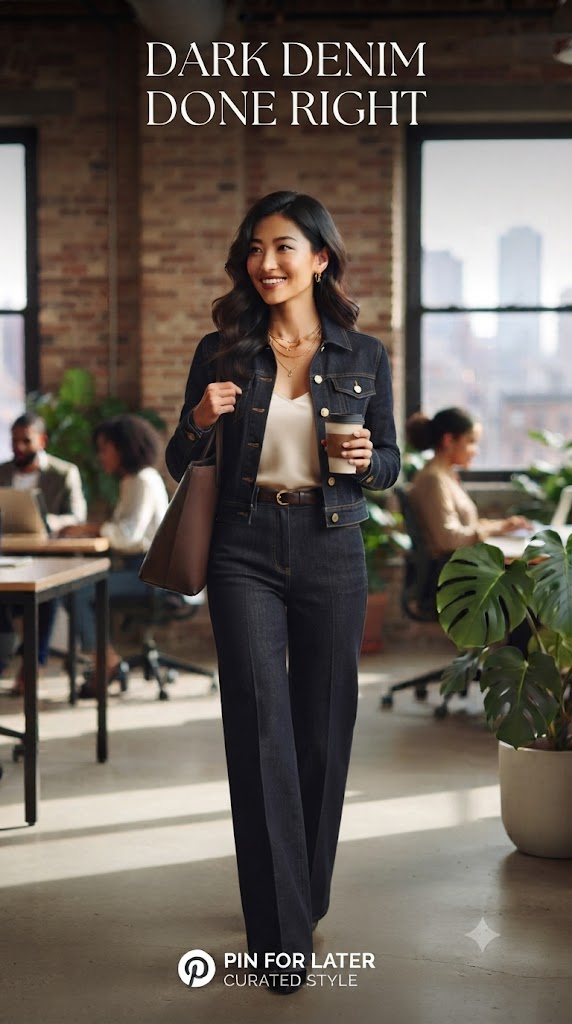
From there, it’s all about elevating the rest of the outfit. Because jeans sit at the casual end of the spectrum, every other element should lean formal: a structured blazer, a crisp shirt, quality leather shoes, a polished bag.
How to style it: Dark jeans + white button-down + camel blazer + loafers is a combination so reliable it should come with a warranty. In warmer months, swap the blazer for a fine-knit polo or an elegant blouse.
Know your office: If you’re new to a workplace, observe what leadership wears before defaulting to denim. When jeans are acceptable, this formula ensures you’ll look intentional rather than casual.
10. The Statement Coat Finish
Here’s a secret of consistently well-dressed people: the outfit isn’t complete until the outerwear is right. A beautiful coat can carry an entire look — and during colder months, it’s often the only thing colleagues and clients see before a meeting starts.
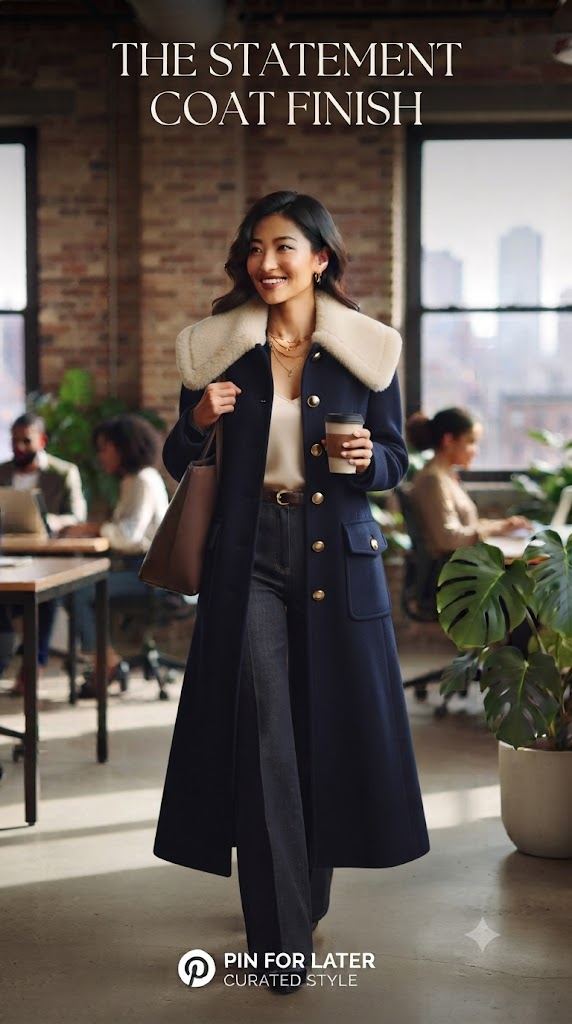
Invest in one exceptional coat and it will elevate everything you own. A camel wool coat is the gold standard: it pairs with literally every color and never goes out of style. A long black tailored coat is equally versatile with a sharper edge. If your wardrobe is mostly neutrals, consider a coat in a confident color — deep red, forest green — as your signature.
How to style it: Drape it over a monochrome outfit, a knit dress, or your favorite suit. Add leather gloves and a structured tote, and you’ll look pulled together before you’ve said a word.
Buying tip: Prioritize wool content and a clean shoulder fit. A well-fitting coat in a modest price range beats an expensive one that swallows your frame.
Building Your Office Wardrobe: Final Tips
Now that you have ten reliable outfit formulas, here’s how to make them work harder for you:
Start with a core color palette. Choose three to four neutrals (like navy, camel, white, and gray) plus one or two accent colors. When everything coordinates, every piece multiplies your outfit options.
Prioritize fit over everything. A moderately priced blazer that fits perfectly will always look better than a designer one that doesn’t. Find a good tailor; small adjustments to sleeves and hems transform how clothes look on you.
Invest where it counts. Spend more on items you wear constantly — blazers, trousers, shoes, and coats — and save on trend pieces and basics.
Prepare the night before. The simplest habit with the biggest payoff. Deciding your outfit in advance removes morning stress and prevents last-minute “nothing to wear” panic.
Keep grooming details sharp. Clean shoes, wrinkle-free fabrics, and tidy accessories complete every look. The most beautiful outfit loses its impact with scuffed heels or a creased shirt.
The Bottom Line
Dressing well for the office isn’t about having endless options — it’s about having the right ones. These 10 outfit formulas give you a dependable framework: the reimagined suit, the trouser-and-blouse classic, the one-and-done dress, monochrome magic, elevated denim, and the finishing power of a great coat.
Mix them, repeat them, and make them your own. Because when getting dressed becomes effortless, you free up energy for what actually matters: showing up confident and ready for whatever the workday brings.
Found this helpful? Save it for your next wardrobe refresh — and share it with a friend who’s always asking, “What should I wear to work?”